






The shift away from SEO‑led growth as the primary engine did not happen overnight.
At Wpmet, it forced a deeper rethink of product strategy, distribution, and how trust is built in an AI-driven discovery landscape.
We already published our full Wpmet Year in Review 2025: From Ideas to Impact. If you want the complete timeline, milestones, and team highlights, you can learn from this blog.
This post is different.
This is a strategic summary of what actually changed in 2025 E why our direction going into 2026 looks very different from how WordPress products were traditionally grown.
Quick Overview
At Wpmet we,
- Stopped treating SEO as the growth engine and started treating it as one channel.
- Rebuilt product led foundations before scaling distribution.
- Optimised for AI visibility, not just rankings.
- Redesigned funnels around hesitation, trust, and outcomes.
- Shifted from traffic dependency to distribution control.
Outcome:
A growth model called product led IEATO framework that compounds through product clarity, AI-era discoverability, and diversified distribution instead of reliance on any single algorithm.
2025 Was Not One Year. It Was Two Halves.
Internally, we now look at 2025 as two distinct phases.
First Half of 2025: Product-Led Reset
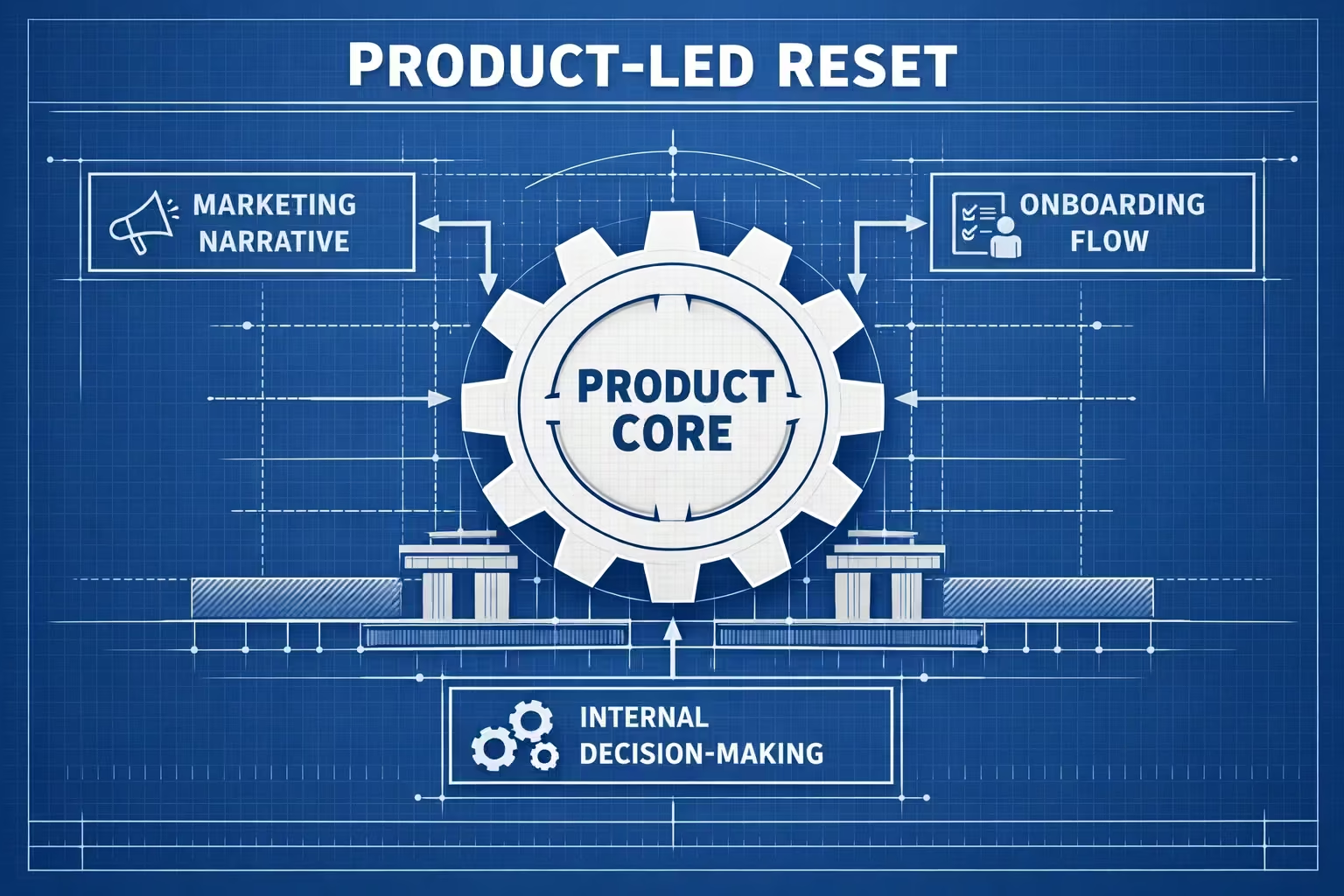
The first half of the year focused on fixing fundamentals.
Before chasing growth, we prioritised:
- Product led marketing and strategy
- Clear ownership and accountability across teams
- Faster internal decision-making
- Aligning marketing narratives with actual product reality
This reset was necessary because growth amplifies weaknesses.
At our scale, marketing alone could not compensate for:
- Onboarding friction
- Unclear value sequencing
- Gaps between user intent and delivered outcomes
This phase is where deeper thinking around product led growth E experience design started shaping decisions across teams.
The impact of that reset became visible from March onward. Across the Wpmet portfolio, total active installs grew by roughly 500,000 in 2025, driven mainly by our free plugins, even as new premium sales declined.
This divergence mattered.
It showed that the product, onboarding, and value delivery were working. What broke was the acquisition model built around organic search, which now required a structural rethink rather than incremental optimisation.
For the full timeline and operational milestones behind this shift, you can refer to our Year in Review 2025.
The Industry Reality We Could Not Ignore
By mid-2025, one pattern became impossible to ignore.
The WordPress ecosystem was experiencing a revenue slowdown, even among mature and well-established products.
Wpmet’s own numbers reflected this shift. New plugin sales decreased by 11.37% in 2025, even as renewal revenue grew by 15.8%, signalling a slowdown in new acquisitions rather than product weakness.
The root issue was not product quality. It was a structural over-dependence on organic search as both the primary discovery and conversion engine. As SEO effectiveness weakened, especially at the top of the funnel, the impact surfaced first in new customer acquisition, while renewal revenue continued to grow, masking the depth of the shift.
This pattern also appeared in other WordPress product businesses; for example, Barn2 reported a 17.8% decline in new sales in 2025, while overall revenue remained steady due to strong renewals, highlighting a broader industry shift rather than isolated underperformance.
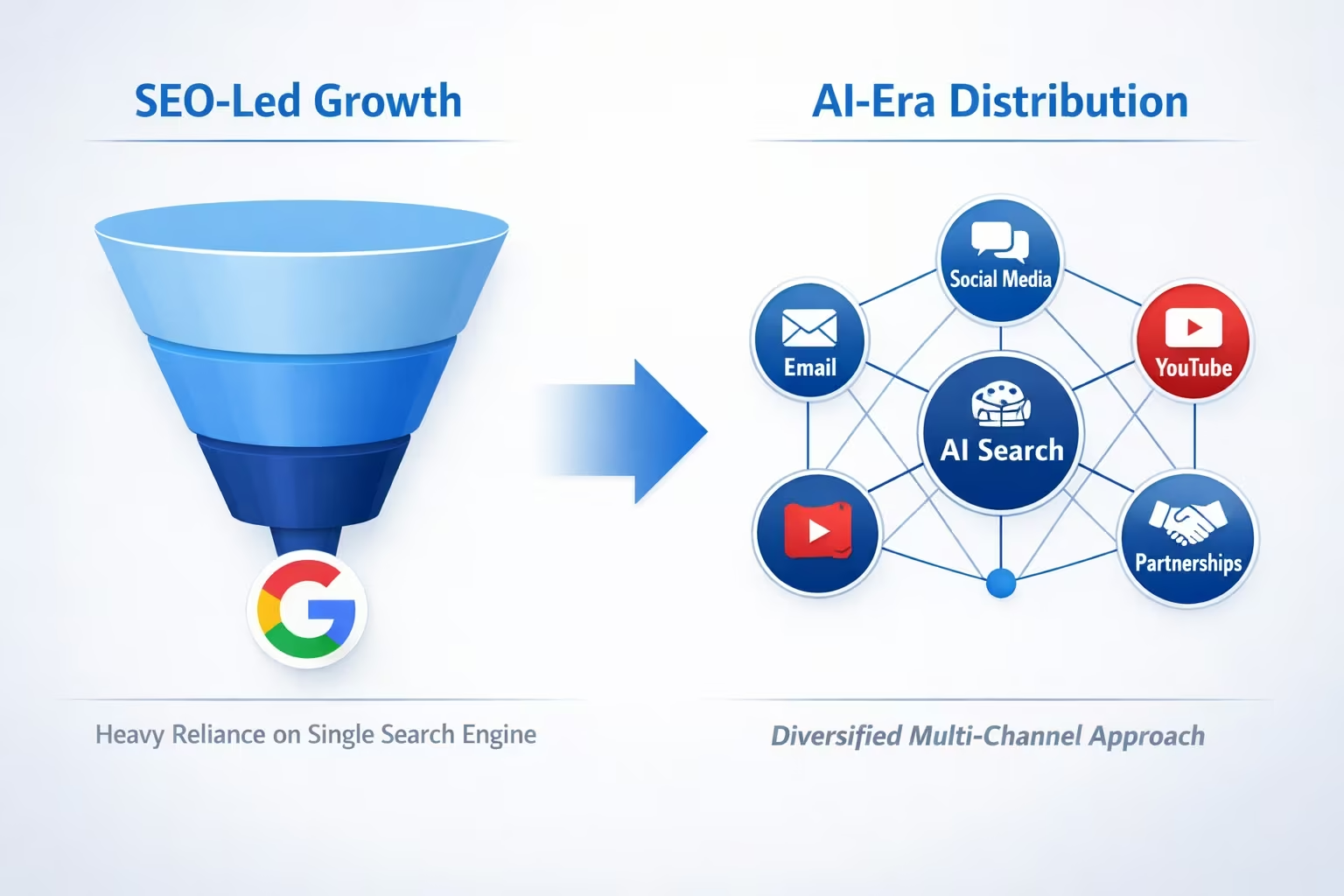
For years, SEO effectively acted as both the acquisition and conversion engine for WordPress products, including Wpmet. As AI Overviews and AI‑generated answers expanded, that engine kept spinning in terms of impressions but stopped converting at historical levels.
The impact was clear:
- Fewer clicks despite strong rankings
- More users consuming answers without visiting websites
- Lower conversion confidence when users did arrive
In Barn2’s 2025 report, for example, Search Console showed impressions and average position holding steady while clicks and click‑through rate dropped by around 57%, with content‑led entry pages down nearly 40% year over year; the kind of pattern many SEO‑led WordPress products now recognise.
This matches broader reporting on Google’s AI Overviews and expanded SERP features, which are increasingly answering user questions directly in the results.
If we look at Wpmet’s SEO performance, organic visibility grew significantly in 2025. Organic clicks increased by 124%, while total impressions surged by 345% year over year.
At the same time, efficiency metrics moved in the opposite direction. Click-through rate declined by 49%, and active users from organic search dropped by 24% compared to 2024.
This contrast highlights a key shift. Wpmet gained far broader search exposure in 2025, but that visibility did not translate into proportional engagement or sustained user activity.
SEO is not dead.
Ma SEO alone is no longer a sustainable growth foundation.
Second Half of 2025: AI Visibility and Distribution
The second half of 2025 marked a deliberate strategic shift.
Instead of trying to recover lost organic performance, we focused on where discovery was actually moving.
That meant two parallel changes.
1. AI Visibility Became a Priority
We stopped thinking only in terms of rankings.
The questions changed to:
- How does our content appear inside AI-generated answers?
- Are our products mentioned when users ask AI tools about the problems we solve?
- Does our content structure support AI summarisation and attribution?
This work produced measurable outcomes.
Wpmet content was featured directly inside Google’s AI Overview, with branded attribution for WordPress- and web-design-related queries.
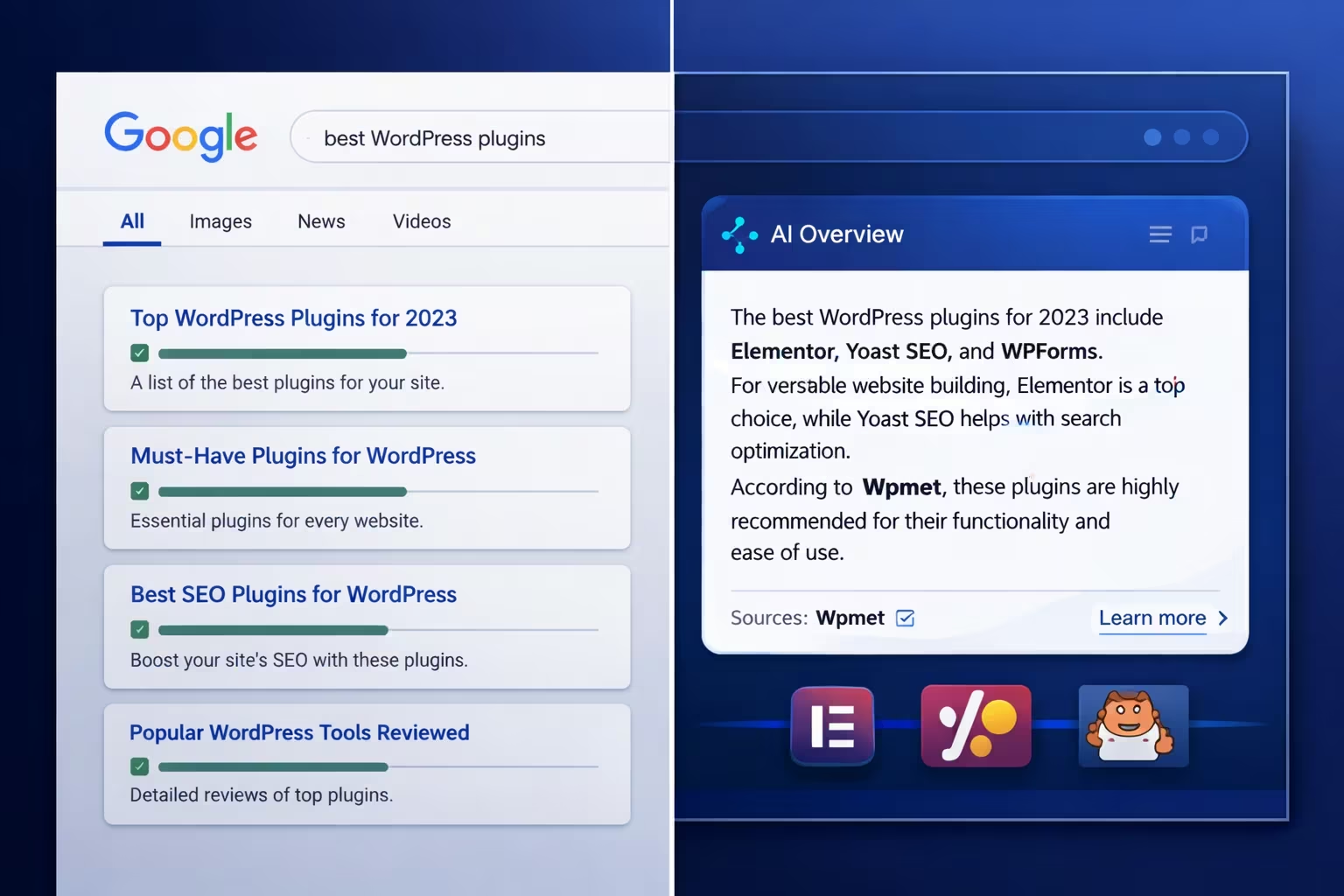
According to Ahrefs data cited in our AI Overview case study, Wpmet blog content has appeared in Google’s AI Overview for 1,244 keywords, reflecting consistent inclusion across informational and how‑to queries rather than isolated wins.
This aligns with broader 2025 analyses of AI Overviews, where informational and problem‑focused queries are the most likely to trigger AI panels, exactly the type of content we now prioritise.
You can read the full breakdown, methodology, and examples here.
This visibility was not accidental. It required changes in:
- Content structure
- Answer clarity
- Entity consistency
- Problem-first positioning
2. Distribution Over Dependency
At the same time, we reduced reliance on any single channel.
Our strategic direction shifted toward:
- Broader distribution across YouTube, social, and paid media
- Stronger partnerships with agencies, affiliates, and communities
- Deeper investment in owned channels like email and in-product messaging
- Better monetisation of existing users through upgrades, bundles, and cross-selling
- Continued presence on high-traffic marketplaces like WordPress.org
This approach is reflected across the Wpmet product ecosystem, where distribution, upgrades, and cross-product journeys are treated as growth levers rather than afterthoughts.
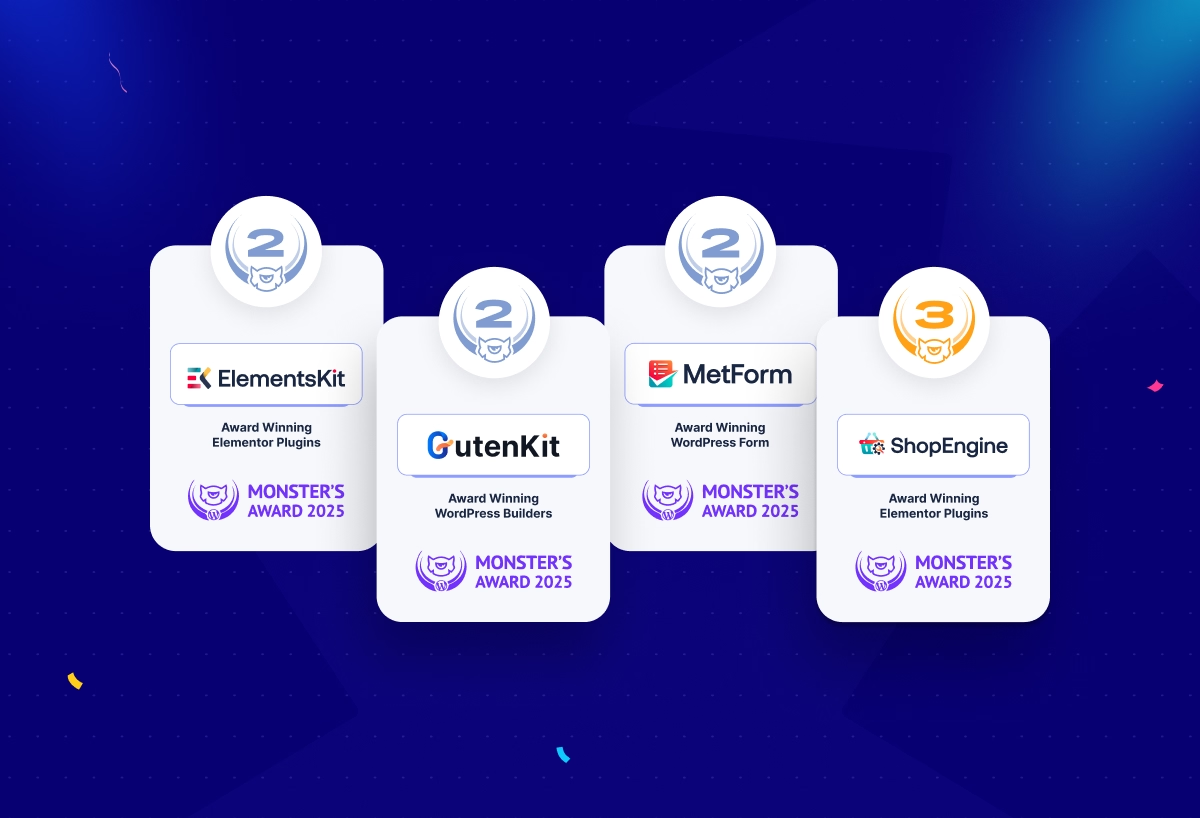
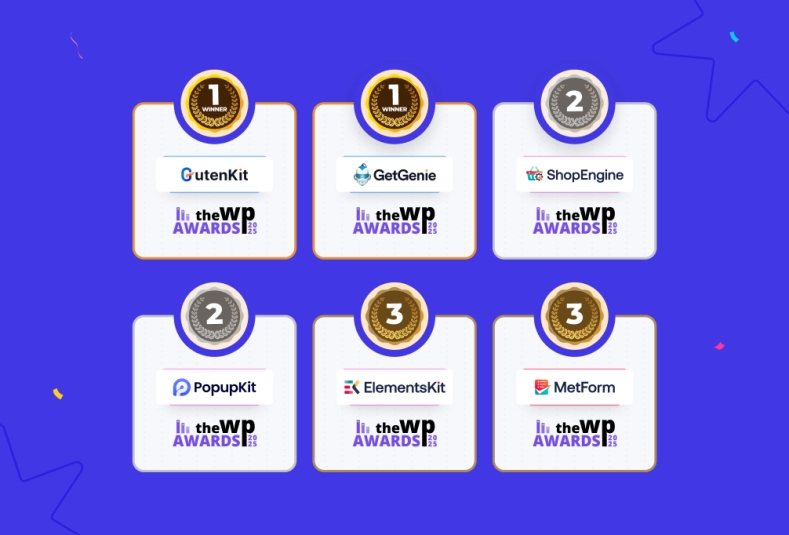
That ecosystem strength also showed up in external recognition. Wpmet plugins received multiple honours at The WP Awards and Monster’s Awards, with ElementsKit, MetForm, ShopEngine, GutenKit, GetGenie, and PopupKit earning podium finishes across WooCommerce, Elementor, Gutenberg, and AI‑focused categories.
For concrete examples of how this shows up in practice, you can explore our product portfolio and bundles.
The goal was simple.
No single algorithm should decide our future.
IEATO: Why Funnels Needed a Structural Rebuild
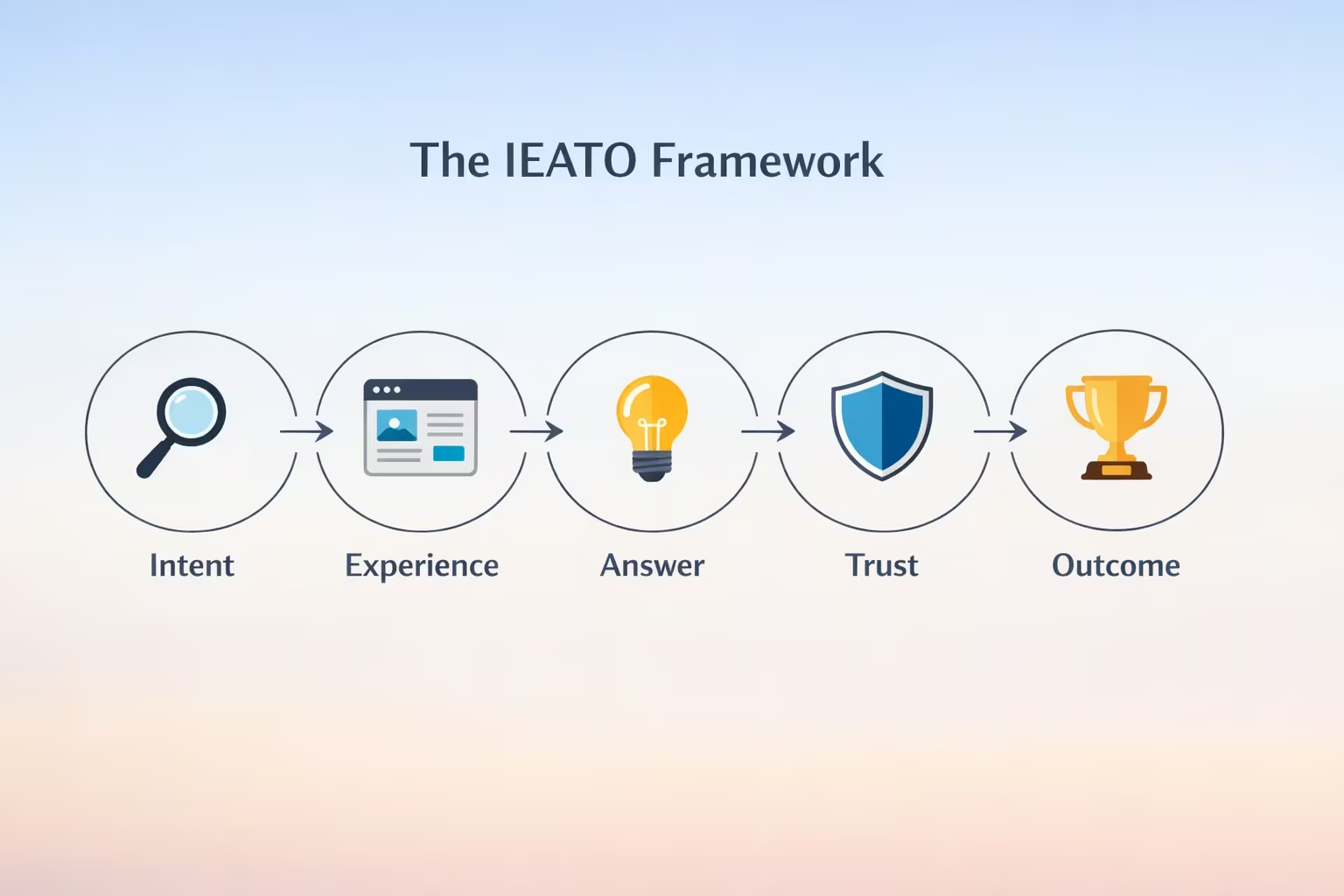
As these changes unfolded, it became clear that traditional funnels like AIDA or AARRR, were no longer fit for purpose.
This led to the adoption of IEATO as a guiding product led marketing framework in 2026:
Intent → Experience → Answer → Trust → Outcome
IEATO Framework Explained
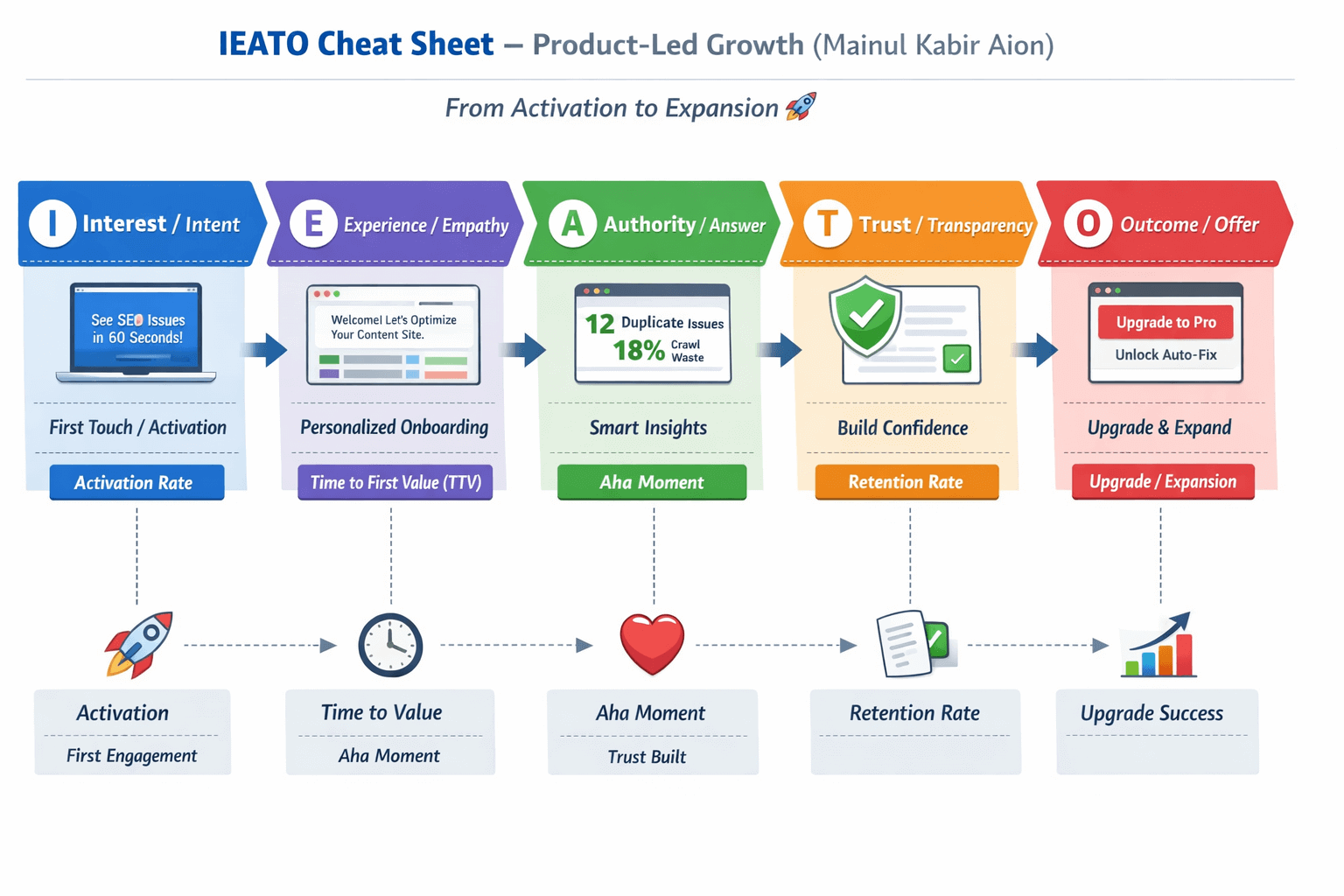
IEATO stands for Intent, Experience, Answer, Trust, and Outcome. It is a marketing framework designed for AI-era distribution, where systems interpret products before users do.
In practice, IEATO functions as a product led IEATO framework, where product clarity, onboarding, documentation, and outcomes are the primary drivers of distribution and trust.
Intent defines what the user is trying to achieve and how clearly your product communicates that purpose.
Experience reflects what users and AI systems observe when interacting with your product, including onboarding, documentation, and usability.
Answer represents how directly your product and content resolve the user’s question or problem.
Trust includes signals such as social proof, usage data, consistency, and third-party validation that reduce uncertainty.
Outcome is the measurable result users achieve when the product fulfills its promise
IEATO exists to solve the real WordPress product problem today.
The Core Problem: User Hesitation
In 2025, the dominant friction was not awareness or traffic. It was hesitation, driven by partial AI answers, higher expectations, and lower tolerance for uncertainty.
Not traffic.
Not awareness.
Ma hesitation, something that surfaced across the ecosystem in 2025.
It appeared in support tickets and sales conversations. It came up in WordCamp hallway chats. It was reflected in industry surveys where founders reported flat or declining new sales, even as WordPress usage and plugin install counts continued to grow.
Users now arrive with:
- Partial answers from AI tools
- Higher expectations
- Lower patience
IEATO forces us to design journeys where:
- Intent is met with guidance, not confusion
- Answers appear before doubt grows
- Trust is built progressively, not demanded upfront
- Outcomes are demonstrated early, not promised late
Many of these changes were informed by observing how users interact with AI-generated summaries before ever reaching our site.
For example, in key onboarding flows, we now guide users to a first meaningful action (like publishing a basic layout or automation) within the first session, and we surface context‑aware prompts and help content earlier in the journey.
Early indicators from these changes were encouraging.
First-session activation rates increased. More users reached clear “aha” moments without opening support tickets. Together, these signals suggest that directly reducing user hesitation can drive meaningful progress, even when top-of-funnel traffic remains under pressure.
Throughout 2025, this framework influenced how we rebuilt:
- Onboarding flows
- Documentation structure
- Pricing logic
- Upgrade and expansion journeys
This work continues into 2026 and you can already see it reflected in our plugin onboarding and help resources: https://wpmet.com/doc/
Why IEATO Replaces Funnels in the AI Era
Traditional marketing funnels and models like AARRR assume linear progression and user attention. They work when users actively move through steps.
IEATO operates differently. AI systems summarise, compare, and recommend without following funnel logic. This makes IEATO fundamentally different from both funnels and AARRR.
Funnels optimise stages. AARRR measures behaviour. IEATO optimises interpretation, distribution, and trust.
This is why IEATO replaces funnels in AI-mediated discovery, not by improving conversion steps, but by changing how products are understood before engagement happens.
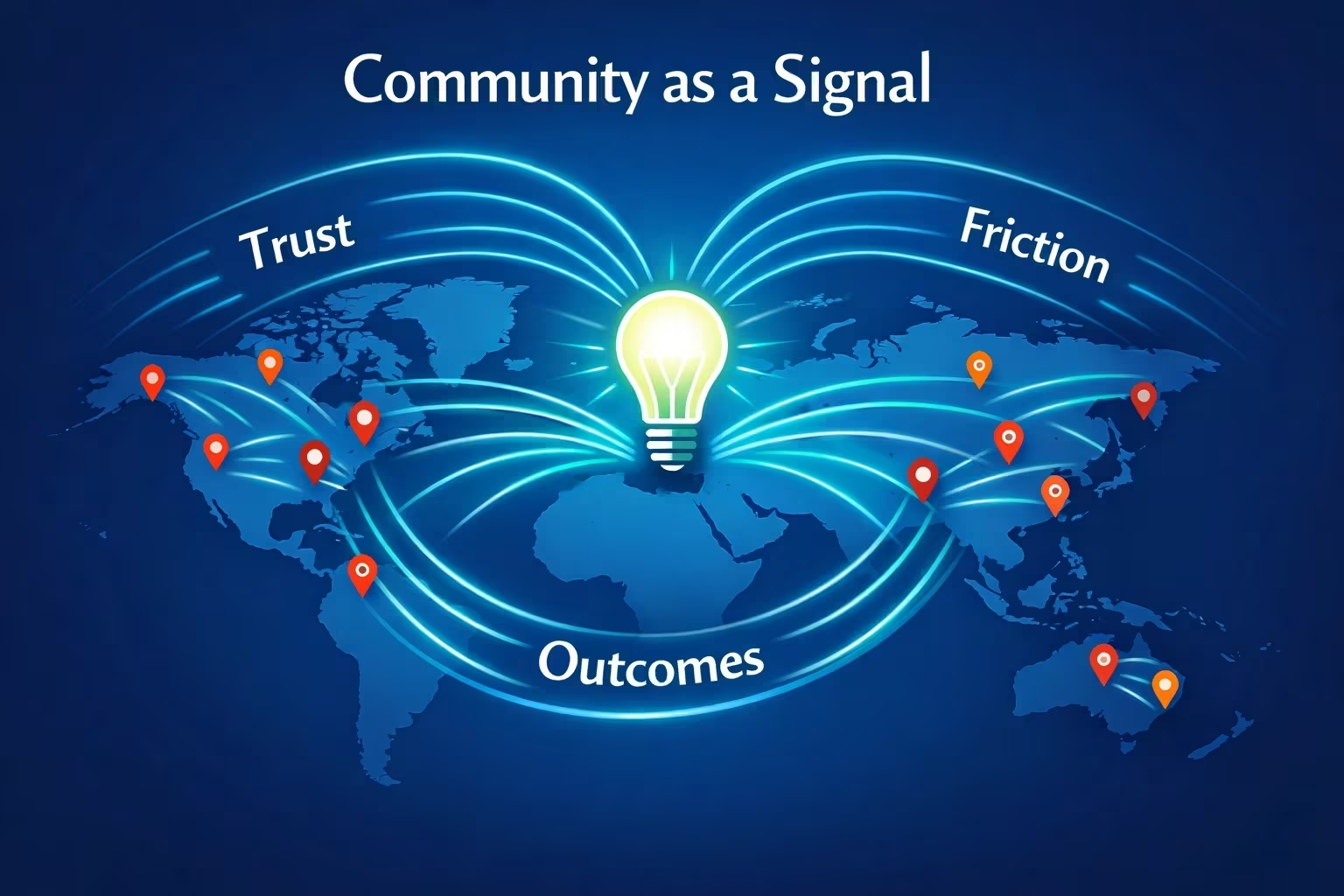
Community as a Signal, Not a Vanity Metric
In 2025, community exposure became an unexpected validation layer for our strategy.
Over the year, I attended several WordCamps across different regions.
My roles included organising flagship events in Asia and the US, co‑leading WordCamp Dhaka, leading WordCamp Malaysia Contributor Day, and leading Community Table at WordCamp Bangkok. I also mentored several other WordCamps, including Islamabad, Bharatpur, Bengaluru, and Nepal.
What mattered was not visibility.
It was pattern recognition.
Across regions, experience levels, and product stacks, the same questions kept resurfacing:
- How do products earn trust faster now?
- Why does feature richness fail to translate into adoption?
- Why are experienced users more sceptical than before?
These were not beginner questions. They came from developers, agency owners, and long-time WordPress users. And the answers consistently mapped back to the same gaps:
- Intent was not being understood early enough
- Experiences created friction before value was clear
- Answers arrived too late in the journey
- Trust was assumed instead of earned
- Outcomes were promised, not demonstrated
In other words, they mapped directly to IEATO.
Community conversations did not introduce new problems; they confirmed that the patterns we were designing for already existed.
This reinforced our belief that IEATO was not an internal framework. It was a reflection of how user expectations had already shifted.
What 2025 Ultimately Changed
By the end of the year, three conclusions became clear at Wpmet:
- Product-led clarity compounds faster than promotional volume
- Organic search is now just one part of the growth mix
- Distribution and trust matter more than raw traffic
The first half of the year fixed the engine.
The second half redefined the road.
Looking Ahead
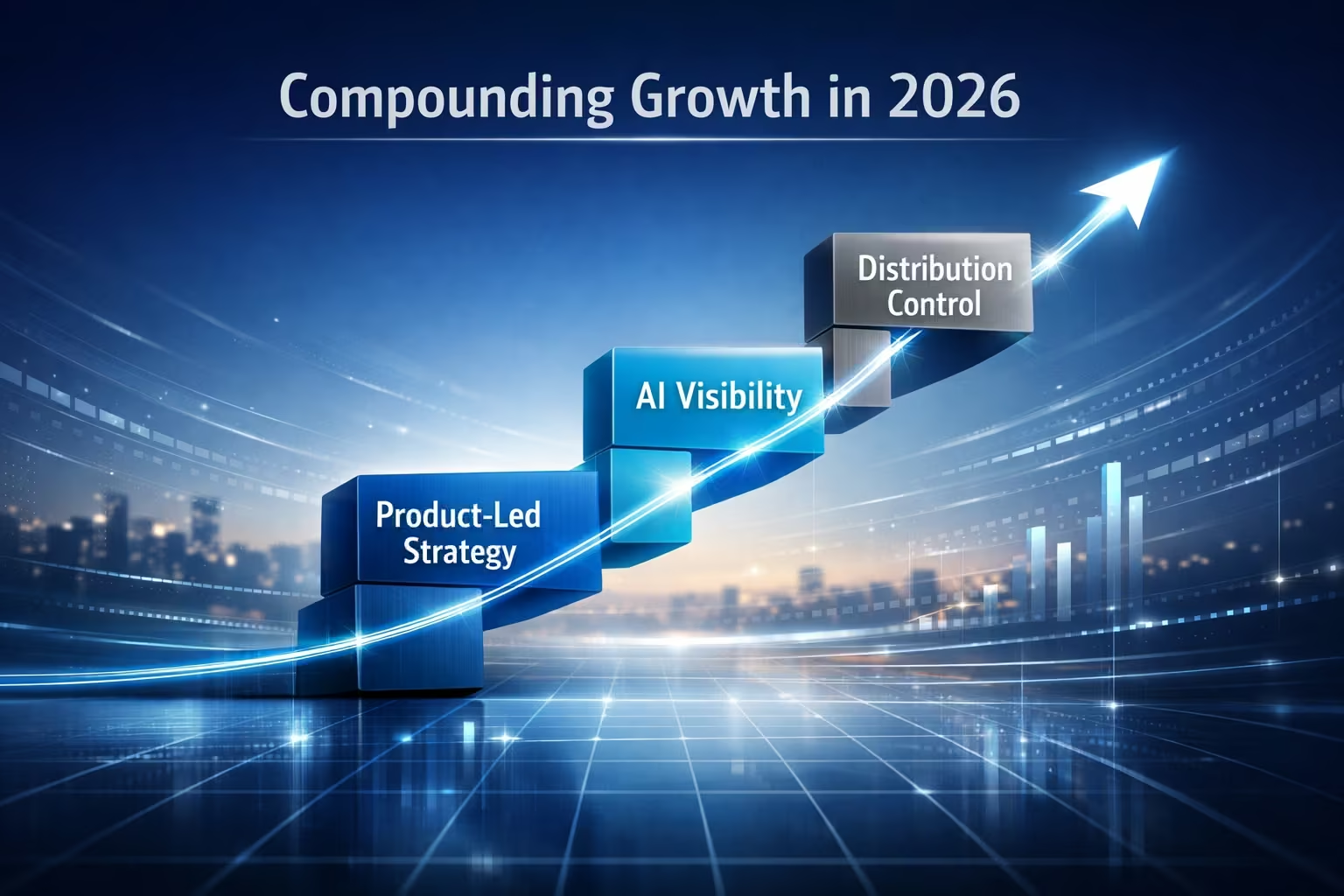
If 2025 was about adaptation, 2026 is about compounding.
- Product-led strategy remains the foundation
- AI visibility becomes a permanent consideration
- Distribution replaces dependency
- Funnels are rebuilt around trust and outcomes
This is how Wpmet is evolving in a post-SEO-dominant world.
The goal now is to turn the signals from 2025 into compounding outcomes. That means protecting and expanding the renewal base that already grew by 15.8%, converting more of the roughly 500,000 additional installs into activated and loyal users, and rebuilding the acquisition mix so organic search becomes one resilient channel among many, not a single point of failure.
These 2026 focus areas are direct execution layers of the product led IEATO framework.
| 2026 focus area | What it means in practice |
|---|---|
| Renewals & expansion | Grow renewal and expansion revenue faster than new sales, so existing users drive most net revenue growth. |
| Install → activation | Increase the percentage of the ~500,000 new installs that reach “first value” within the first session. |
| Diversified acquisition | Reduce reliance on any single channel so no source, including Google organic, drives a majority of new MRR. |
| AI Overviews & LLM citations | Consistently appear in Google AI Overviews and be cited by major LLMs when users ask about problems Wpmet solves. |
| Referral traffic from AI tools | Turn AI and LLM mentions into a meaningful, trackable source of qualified referral traffic to Wpmet properties. |
| Paid & community-led growth | Invest more in paid marketing and community-led initiatives that convert through trust, education, and reputation. |
| Automation & lifecycle journeys | Use automation to orchestrate in-product and lifecycle messaging that guides users from install to expansion. |
| Product shipping cadence | Maintain or exceed 2025’s launch and feature velocity across flagship plugins and newer products. |
If you have not yet read the full Year in Review, you can find it here:
https://wpmet.com/year-in-review-2025/
That post shows what happened.
This one explains why it mattered.

Domande frequenti
1. What is the IEATO framework?
The IEATO framework is a marketing and distribution framework for the AI era. IEATO stands for Intent, Experience, Answer, Trust, and Outcome. It explains how products are discovered, interpreted, and trusted by AI systems and users. It is often referred to as the IEATO marketing framework or a semantic marketing framework.
2. What does IEATO mean in marketing?
IEATO meaning in marketing shifts focus from persuasion to interpretation. It is a meaning-based marketing framework where success depends on how AI systems understand product value, not just how messages are crafted.
3. How is IEATO different from traditional funnels and AARRR?
IEATO vs traditional funnel and marketing funnels vs IEATO highlight a core difference. Funnels and AARRR models track stages and metrics. IEATO vs AARRR focuses on interpretation and distribution. IEATO replaces funnels because AI systems do not follow linear journeys.
4. How is IEATO different from product-led growth?
IEATO vs product-led growth shows that IEATO extends product-led thinking into AI-driven discovery. While product-led growth focuses on the product driving adoption, IEATO acts as a product-led distribution framework that explains how AI systems surface and evaluate products.
5. Why does IEATO matter in the AI era?
In the AI era, discovery happens through summaries, comparisons, and recommendations. IEATO matters because it aligns with how AI interprets marketing content, enabling AI-first product-led strategy and sustainable product-led growth after AI.
6. How do AI systems understand product value under IEATO?
AI systems understand product value through intent matching, explicit answers, documented experience, trust signals, and outcomes. This is why IEATO is often described as marketing for LLMs not users, while still serving human decision-making.
7. What does product-led marketing look like in the AI era?
Product-led marketing in the AI era prioritises clarity over campaigns. AI era product-led growth depends on how well products explain themselves to AI systems through documentation, use cases, and outcomes rather than promotion alone.
8. How do you apply the IEATO framework in practice?
To apply the IEATO framework, structure your marketing around clear intent, real experience, direct answers, visible trust, and measurable outcomes. This approach works across SEO, AI discovery, and product marketing.
9. Can you give an example of the IEATO framework?
An IEATO framework example for SaaS marketing or WordPress products includes clear use-case pages, explicit feature explanations, proof through demos or documentation, social trust, and a defined next step tied to outcomes.
10. How does IEATO influence go-to-market strategy?
An IEATO go-to-market strategy focuses on long-term interpretability rather than short-term launch tactics. It ensures products remain discoverable and understandable in AI-driven distribution environments.
11. Who initiated the IEATO framework?
The IEATO framework was initiated and first articulated by Maniul Kabir Aion through applied work in product-led marketing, AI-era distribution, and meaning-based optimisation. It emerged from real-world observation of how AI systems interpret products, content, and trust signals, and was refined through early adoption and practical use rather than formal theory building.


Lascia un commento